
Biography
Dr. Michael A. Soderstrand is an electrical engineer, educator, researcher, author, and academic administrator whose career has spanned more than five decades. He has devoted his professional life to advancing engineering education, conducting innovative research in signal processing and electronic circuits, mentoring students, and providing leadership within the international engineering community. Over the course of his career he has authored more than 200 technical papers, written or contributed to 15 books and book chapters, edited two IEEE Press books, and holds three U.S. patents.
Dr. Soderstrand received the Associate of Arts degree from Sacramento City College in 1966 before entering the University of California, Davis, where he earned the B.S. (1968), M.S. (1969), and Ph.D. (1972) degrees in Electrical Engineering. His doctoral program also included a minor in Mathematics.
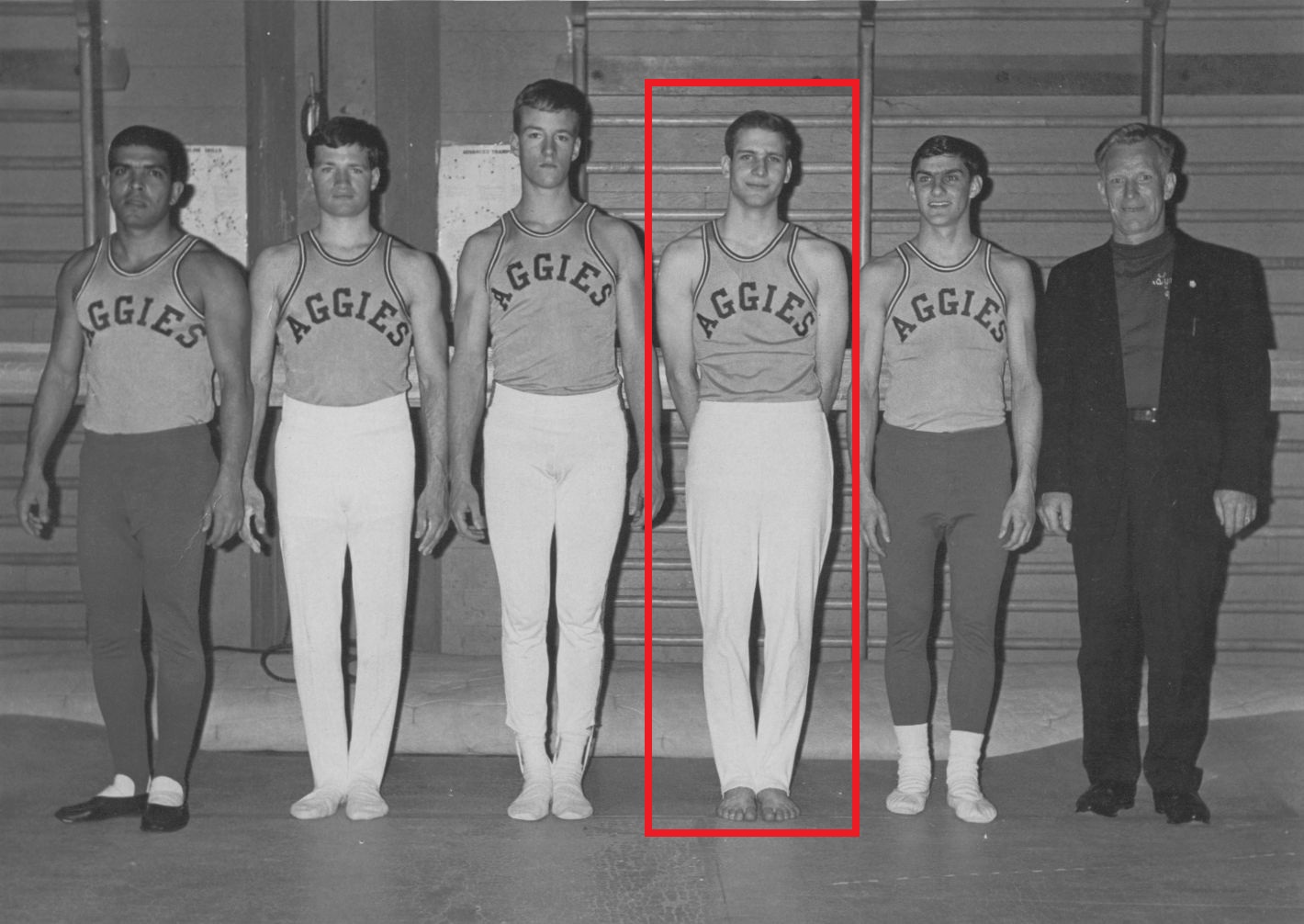
As an undergraduate at UC Davis, he was active in campus life beyond the classroom. He was a member of the Cal Aggies gymnastics team, competing during the late 1960s, and was also active at the student-operated radio station KDVS. His early experience with KDVS would later come full circle when, as a faculty member, he led one of the university's pioneering efforts to stream KDVS broadcasts over the Internet during the mid-1990s.
In 2004, he completed the four-year Education for Ministry (EfM) program through the School of Theology at the University of the South (Sewanee), earning the Certificate in Education for Ministry. His association with UC Davis began as an undergraduate student in 1966 and continued throughout his academic career until his retirement from the faculty. His theological studies through Education for Ministry helped shape his later work exploring the relationship between quantum physics, process theology, and Christian thought, including his lecture series Process Theology as a Lens for Bringing Quantum Physics Into Focus.
From 1972 through 1997, Dr. Soderstrand served on the faculty of the Department of Electrical and Computer Engineering at the University of California, Davis. During those twenty-five years he taught undergraduate and graduate courses, developed new laboratory curricula, authored textbooks and laboratory manuals, served multiple terms in departmental leadership, and received both the College of Engineering Outstanding Teacher Award and the Department Outstanding Teacher Award. His research established important contributions in active filter design, residue number arithmetic, digital signal processing, and electronic circuit design.
Following his years at UC Davis, Dr. Soderstrand became Professor and Head of Electrical and Computer Engineering at Oklahoma State University. He later continued teaching as an adjunct professor at DeVry University, Southern Nazarene University, The Catholic University of America, and Towson University, sharing his enthusiasm for engineering, computer science, mathematics, and technology with a new generation of students.
Among Dr. Soderstrand's highest professional honors is his election as an IEEE Fellow in 1999. Fellow is the highest grade of membership conferred by the IEEE and is reserved for individuals with extraordinary records of accomplishment in engineering and technology. In 2011 he became an IEEE Life Fellow, recognizing both his distinguished professional achievements and his many years of service to the world's largest professional organization dedicated to advancing technology.
In addition to his research and teaching, Dr. Soderstrand has held numerous leadership positions within the IEEE, including Vice President of the IEEE Circuits and Systems Society, Founding Editor of IEEE Circuits and Systems Magazine, Associate Editor of IEEE Transactions on Circuits and Systems, and General Chair of several major international IEEE conferences.
Today Dr. Soderstrand continues his lifelong commitment to education through the development and presentation of public lectures exploring the relationship between Process Theology and Quantum Physics. Drawing on both his engineering background and his long-standing interest in theology, these lectures seek to make modern quantum physics accessible to a broad audience while encouraging thoughtful dialogue between science, philosophy, and religion.